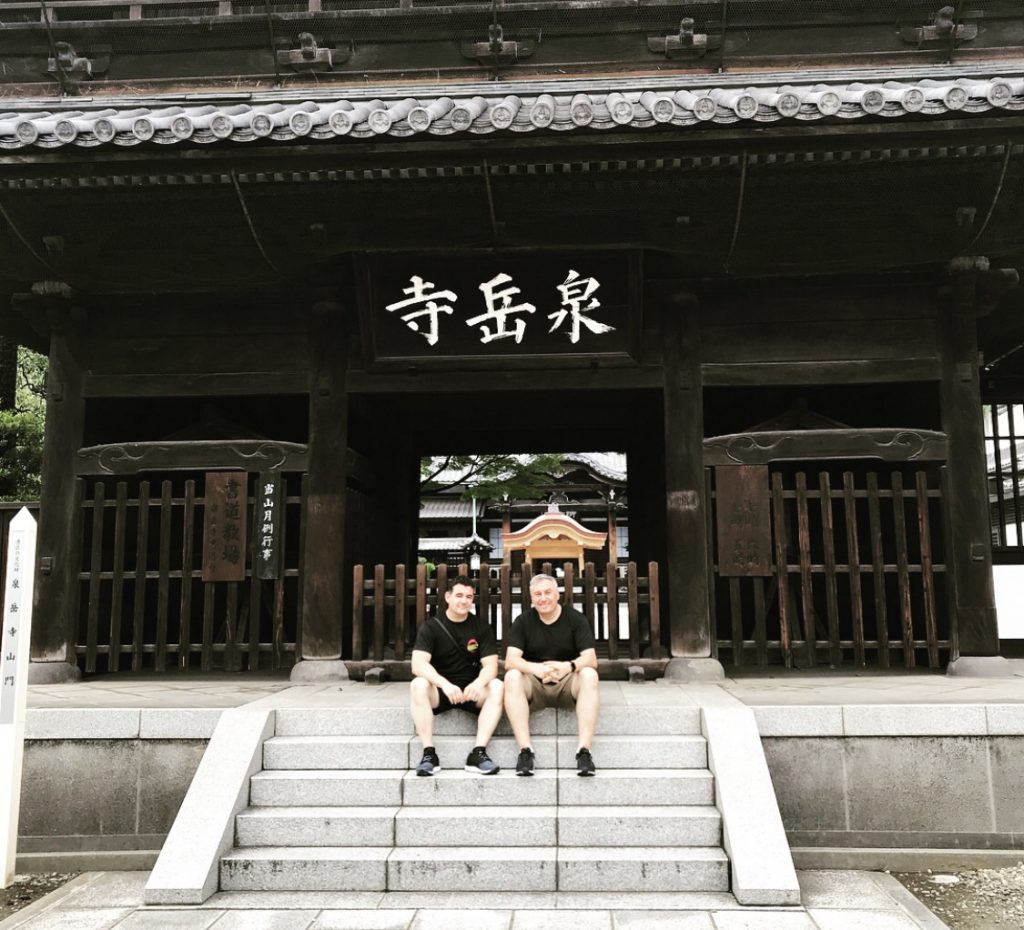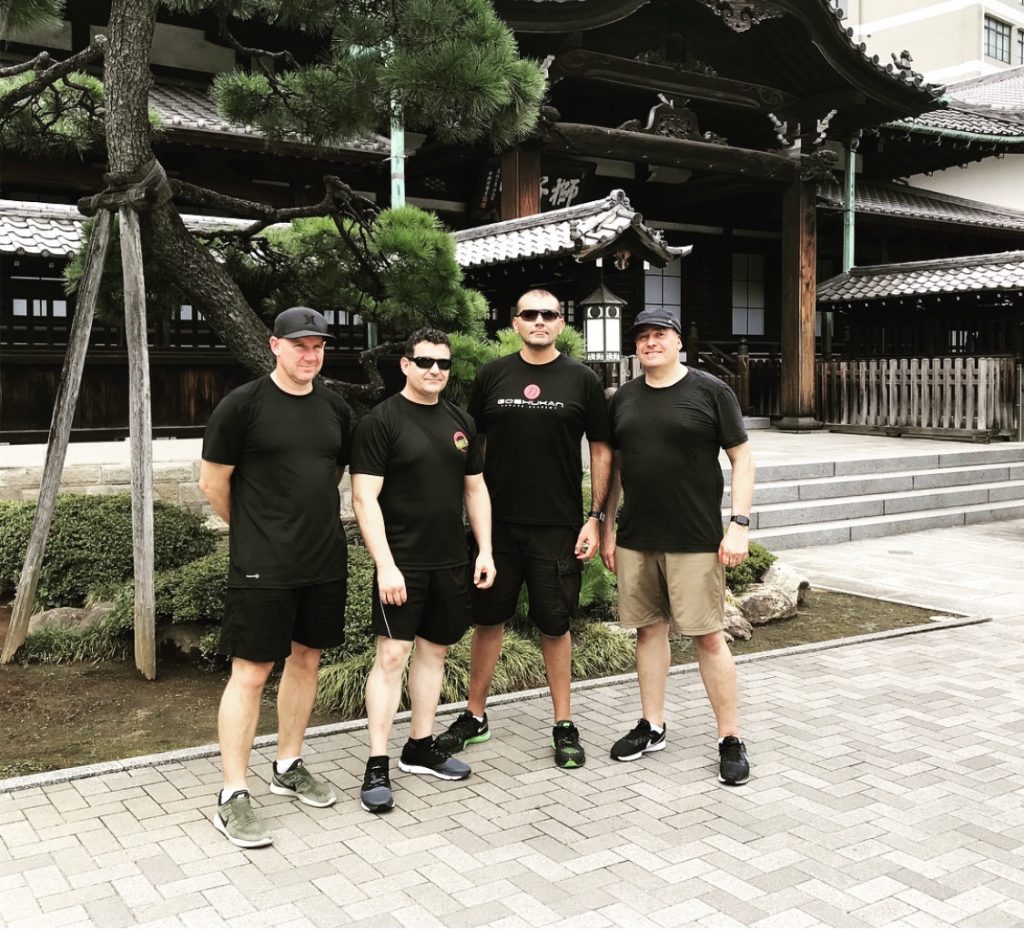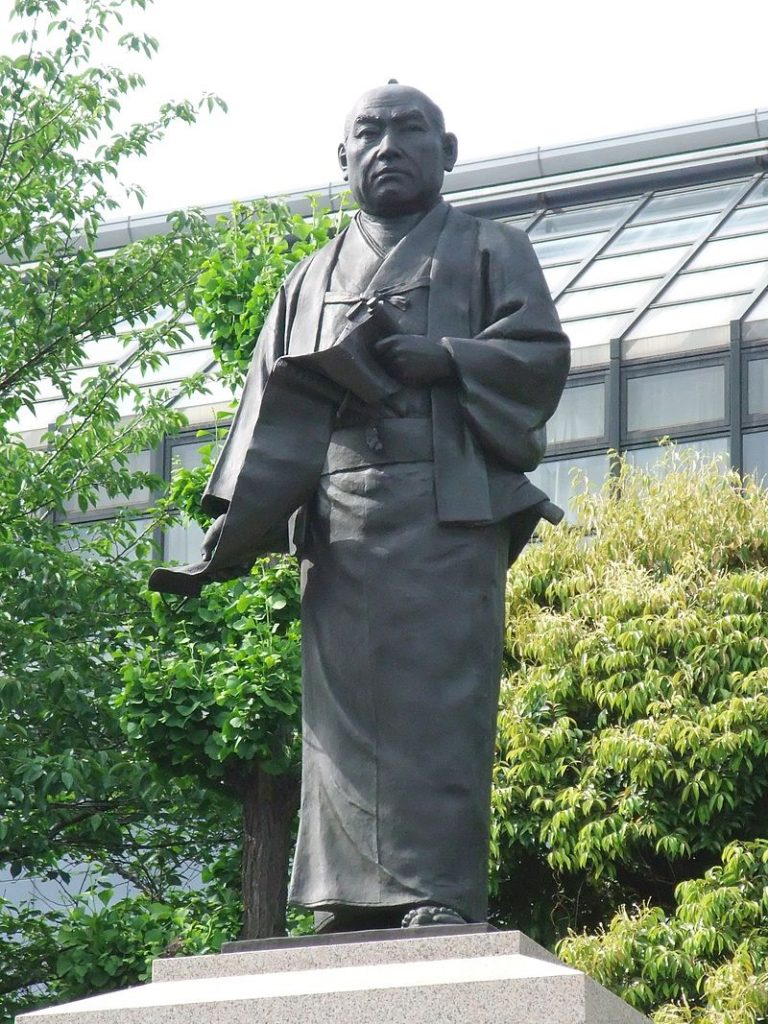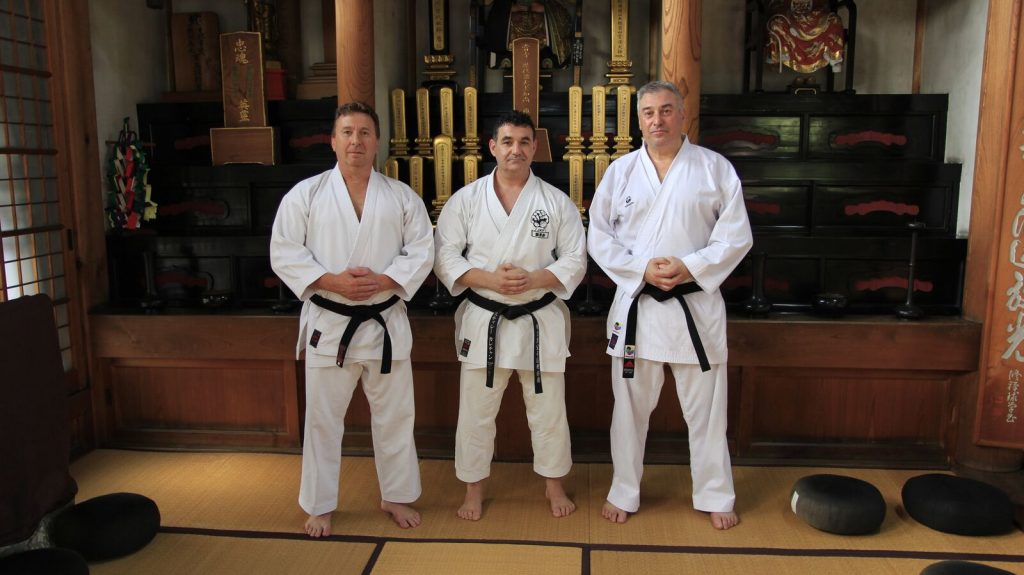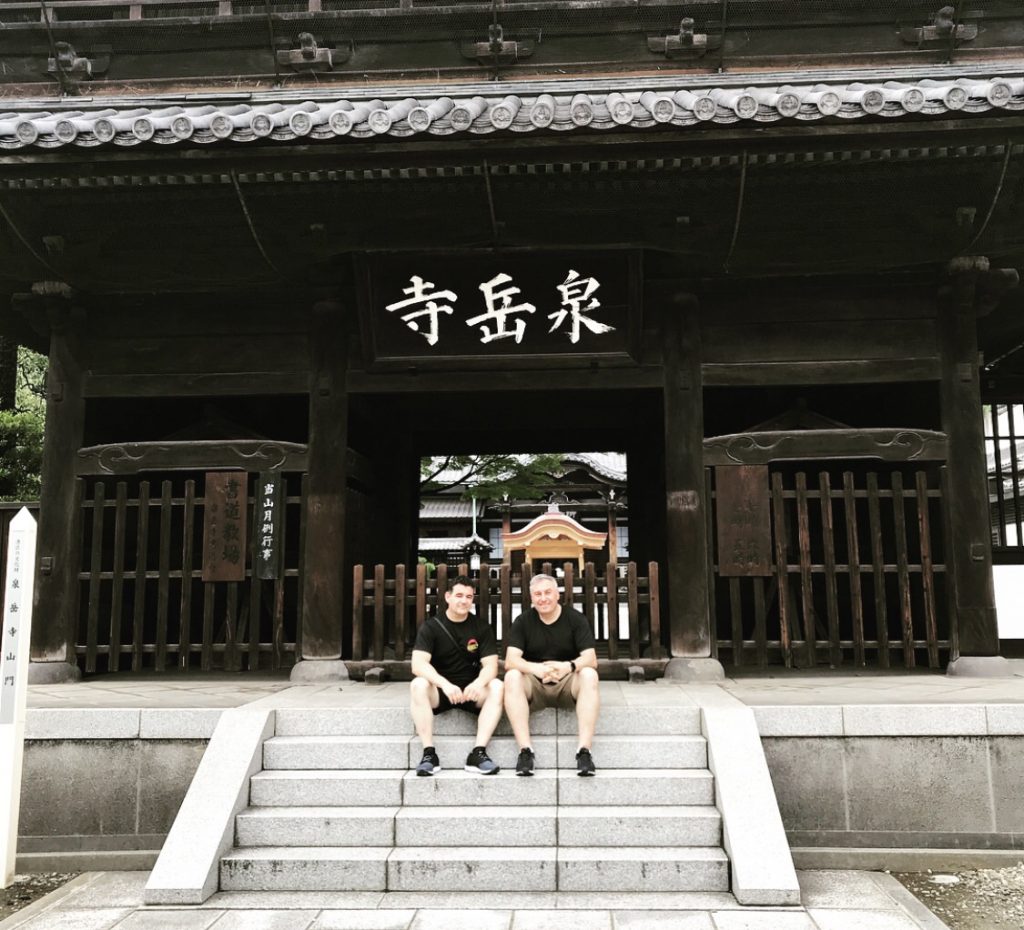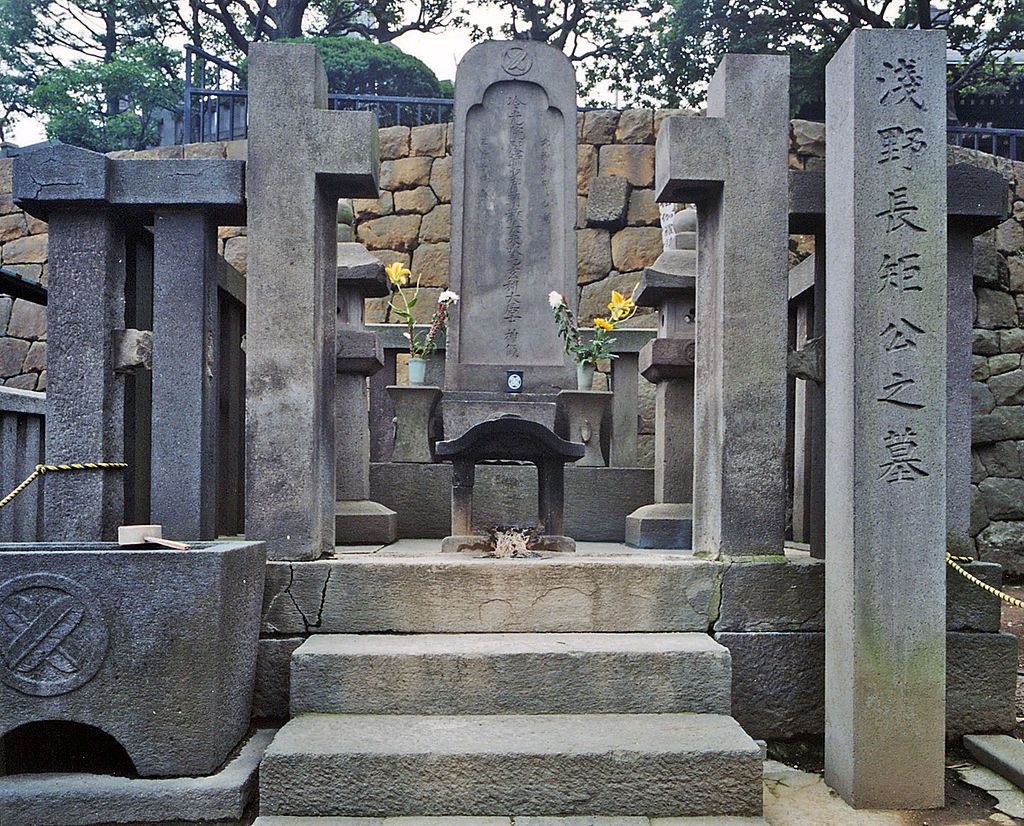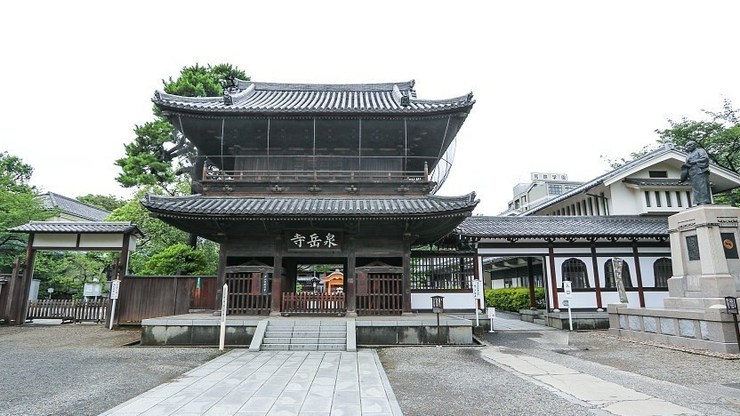
We visited the Sengakuji temple where all the 47 Ronin are buried
Although there is a movie called the 47 Ronin depicting the story, I didn’t really understand what Seppuku (hara-Kiri) really meant but understood it represented an order to kill yourself at a predetermined time and place as sort of punishment, so It’s both complex and definitive. After I got back home to Australia, I started to learn more about what happened on the 14th of December 1702. This has everything the samurai spirit was built on, honour, loyalty, revenge, chivalry and finally Seppuku. I have placed many links throughout this blog so you can get a better idea of the people involved as well as the relevance of the particular era.
This story is one of most celebrated in the history of the samurai. This was perhaps all the more so because it occurred at a time when the samurai class was struggling to maintain a sense of itself – warriors with no war, a social class without a function.
The tale could be said to have begun with the teachings of Yamaga Soko (1622-1685), an influential theorist who wrote a number of important works on the warrior spirit and what it meant to be samurai. His writings inspired a certain Ôishi Kuranosuke Yoshio, a samurai and retainer of Asano Takumi no kami Naganori (1667-1701), who led a branch of the powerful Asano family.
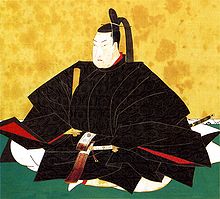
It happened that Lord Asano was chosen by the shogun, Tokugawa Tsunayoshi, to be one of a number of daimyo tasked with entertaining envoys from the Imperial family. To assist him in this new duty, the Bakufu’s highest ranking master of protocol, Kira Kozukenosuke Yoshinaka (1641-1702), was assigned to instruct him in matters of etiquette. Kira, it seems, was a somewhat difficult character and expected Asano to compensate him monetarily for the trouble, which Asano held was simply his duty. The two grew to dislike one another intensely, and Kira made every effort to embarrass his student. Finally, in April of 1702, the situation exploded within the shogun’s palace – Kira insulted Asano once again, prompting the latter to draw his sword and swing at him. Kira was only wounded in the attack and Asano was promptly placed under confinement.
Striking another man in anger was against the law – doing so within the shogun’s palace was unthinkable. Asano made little effort to defend himself during questioning except to say that he bore the shogun no ill will and only regretted that he had failed to kill Kira.
After the o-metsuke had completed their investigation of the matter, the shogunate passed down a sentence of death on Asano, ordering him to slit his belly at once. The shogun also decreed that his 50,000-koku fief at Akô in Harima was to be confiscated and his brother Daigaku placed under house arrest. When the news of the unfortunate event reached Asano’s castle, his retainers were thrown into an uproar and argued heatedly over what to do next. Some favoured accepting their lot quietly and dispersing as ronin, while another group called for a defence of the castle and an actual battle with the government. Ôishi Kuranosuke, who urged the retainers to give up the castle peacefully and struggle to rehabilitate the Asano family while at the same time preparing to take revenge on Kira, sounded the view that prevailed.
Accordingly, a band of Asano retainers – now ronin – set out on a carefully planned road to revenge. Kira was no fool, and expecting some sort of attempt on his life by the Asano men increased his personal guard. Ôishi’s scheme was therefore to lull their quarry into complacency, biding their time while they waited for the right moment. To this end the ronin hid away a cache of weapons and armour before ostensibly dispersing, some taking up menial jobs while others, like Ôishi himself, let it seem that they had lost any concern for their futures. Ôishi left his wife and began frequenting all of Edo’s houses of ill repute, carousing with prostitutes and engaging in drunken brawls. On one occasion, a samurai from Satsuma is supposed to have come across Ôishi drunk in the street and spat upon him, saying that he was no real samurai.
Needless to say, Kira began to doubt that he was in any real danger, and within a year had relaxed his guard. It was at that point that the ronin struck. 47 of them gathered on 14 December 1702 and, after donning the armour and taking up the weapons from the cache, they set out on their revenge on that same snowy night. Once at Kira’s Edo mansion, they divided into two groups and attacked, with one group entering through the rear of the compound while the rest forced their way through the front, battering the gate down with a mallet. Kira’s men, many of whom were killed or wounded, were taken completely by surprise but did put up a spirited resistance (one of the ronin was killed in the attack), though ultimately to no avail: Kira was found in an outhouse and presented to Ôishi, who offered him the chance to commit suicide. When Kira made no reply, Ôishi struck off his head with the same dagger that Asano had used to kill himself with.
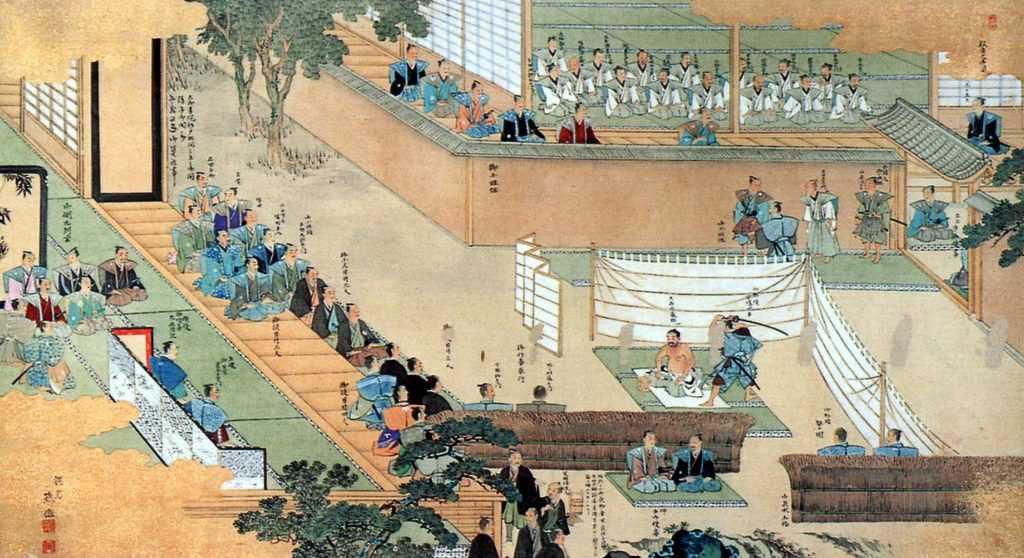
Kira’s head was then put in a bucket and carried to the Sengakuji, where Asano was buried. After Ôishi and the others had given the bloody trophy to the spirit of Asano, they turned themselves in. The assassination of Kira placed the government in a difficult situation. After all, the 46 survivors now awaiting their fate had lived up to the standards of loyalty expected of true samurai and the ideals propounded by such men as Yamaga Soko. Additionally, the decision to order Asano to commit suicide and confiscate his domain while taking no action against Kira had not been popular (at least one of the inspectors at the time had been demoted for protesting the verdict). Nonetheless, the Bakufu decided that the maintenance of order would once again have to prevail, and so the ronin were ordered to commit suicide – a sentence suggested by the famous Confucian scholar Ogyû Sorai (1666-1728). They were at this time divided up into four groups under guard by four different daimyo, yet once they had all died, their bodies were buried together at the Sengakuji.1 Legend has it that the Satsuma samurai who had spit upon Ôishi in the street came to the temple and slit his own belly to atone for his insults.
The Revenge of the 47 Ronin continued to spark controversy throughout the Edo Period. One view had it that Ôishi and his men had in fact erred in waiting as long as they had, that in so doing they risked Kira dying (he was, after all, over 60) and their efforts coming to nothing. This was, for example, the view of Yamamoto Tsunetomo (author of the famed (Hagakure). The Confucian scholar Sato Naotaka (1650-1719) criticised the ronin for taking action at all, as the shogun’s decision to order Asano to commit suicide should have ended the matter there and then. He also shared Tsunetomo’s belief that the ronin ought to have committed suicide at the Sengakuji once their deed was done. In giving themselves up to be judged, they appeared to have hoped to receive a light sentence and therefore continue living -a shameful objective, given their crimes. At the same time, Naotaka reserved his harshest words for Kira, whom he called a coward and whose precipitation of the whole affair had led to so many deaths.
Other writers did not share those views. Men like Asami Yasuda (1652-1711) defended the actions of the ronin as being appropriate (if not actually challenging the Bakufu’s decisions) and Chikamatsu wrote a favourable play (Chushin-gura) that became an instant and timeless classic. In the end, the Ôishi Kuranosuke and his ronin became the stuff of legend, and continue to spawn books, movies, and television shows at a prodigious rate. The Sengakuji is still a popular spot in Tokyo and a place for modern admirers of what many feel were the finest examples of samurai loyalty to emerge from the Edo Period.